Muscle Insertions Explained: Good vs Bad Genetics
Two lifters run the same program for years. One gets a peaked biceps, a low wide V-taper and full calves. The other doesn't. Most of that difference comes from one thing: where each muscle attaches to the bone.

Prefer watching? The full video is above. This page is the written breakdown, muscle by muscle.
Key takeaways
- An insertion is where a muscle's tendon attaches to the bone. You can't change it with training.
- Low insertions (longer muscle bellies) usually look fuller. High insertions look shorter, sometimes with more peak.
- Training changes the size of the muscle, not its shape or where it ends.
- Every physique has 2 or 3 "bad" insertions. Even Arnold and Ronnie did.
What is a muscle insertion?
Every muscle runs between two attachment points. The insertion is the end that moves, where the tendon fixes to the bone. When that point sits further from the joint, the muscle belly is longer and fills more of the limb. When it sits closer, the belly is shorter and a visible gap of tendon appears.
Insertions are set by your genetics before you ever lift. You can grow the muscle, but you can't move where it ends.
Biceps: peak vs fullness
A short, high insertion makes the biceps bunch up into a sharp peak when flexed. Arnold Schwarzenegger is the textbook case. A long, low insertion, like Flex Lewis's, gives a fuller, bigger-looking arm when relaxed, with a rounder, softer peak.
Neither is wrong. The peak is the "lottery ticket" for photos, while the long biceps looks bigger in everyday life.
Abs: four-pack, six-pack or eight-pack
The number of blocks you can show depends on how many tendinous intersections cross your rectus abdominis. That's written in your DNA, not in your rep count. Ronnie Coleman, eight-time Mr. Olympia, had a four-pack even at his leanest. The blocks can also be uneven left to right, and that's genetic too.
Lats: the length of your V-taper
A lat that inserts low, closer to the pelvis, sweeps further down the torso and makes the waist look narrower by contrast. A high lat insertion still builds width, but the sweep is shorter and the taper less dramatic. Same shoulders, same waist, two very different backs.
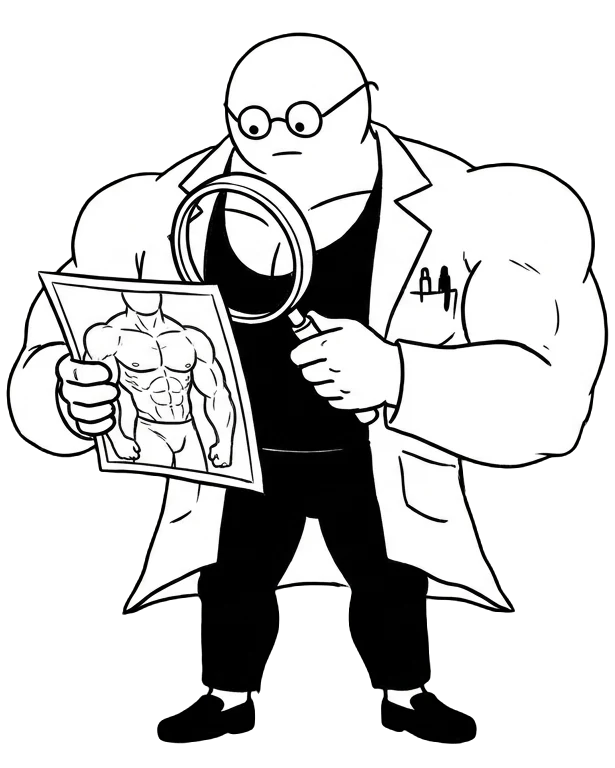
Which insertions did you get?
The free genetics test walks you through your frame and insertions in 2 minutes.
Take the free testQuads: teardrop and outer sweep
The teardrop is the vastus medialis. When it inserts low, it hangs right over the knee, as on Tom Platz, whose quads still look anatomically impossible. The outer sweep is the vastus lateralis. Nick Walker's sweep is huge from the side, but because it doesn't run all the way up to the hip, his upper quad can look narrow from the front.
Calves: the cruelest insertion
With a low calf insertion, the muscle belly fills the space from knee to ankle. With a high insertion, the belly is short and a visible gap sits above the Achilles. High calves can still grow, but they will never fill a space that isn't there. That's why calves are the most common complaint in any gym.
Forearms: the honest muscle
Low-inserting forearm muscles fill the arm almost down to the wrist. Ramon Dino barely trains forearms and still carries them like a separate body part. Chris Bumstead's are well developed and proportional, but next to Ramon they look like a different muscle group.
Chest: shelf or gap
A low pec insertion along the sternum creates fullness and a shelf over the abs. Arnold's chest overhung from every angle. The bad tickets show up here more than anywhere: a visible gap between the pecs, pectus excavatum or uneven attachments. Flyes don't close a gap the skeleton created.
Triceps: the horseshoe
The triceps is about two thirds of the upper arm, and the long head decides how it looks. A low long-head insertion gives a full horseshoe from every angle. Roelly Winklaar is the extreme example. A higher insertion still builds a strong triceps, but the horseshoe is shorter.
| Muscle | "Good" insertion | What it gives you |
|---|---|---|
| Biceps | High (short) for peak, low for fullness | Arnold's peak vs Flex Lewis's size |
| Abs | More tendinous intersections | Six or eight visible blocks |
| Lats | Low | Longer, more dramatic V-taper |
| Quads | Low vastus medialis | Teardrop over the knee |
| Calves | Low | Full lower leg, no ankle gap |
| Forearms | Low | Thickness down to the wrist |
| Chest | Low, close to the sternum | Full shelf, no center gap |
| Triceps | Low long head | Full horseshoe |
So what can you still change?
More than you think. Insertions set the shape. Size, fullness and the muscles around a weak point are still yours to build:
- High biceps? Build the brachialis underneath to fill the gap at the elbow.
- High lats? Widen the side delts so the taper starts higher and reads wider.
- High calves? Train them with more frequency and full stretch. You won't fill the gap, but you can thicken what's there.
- Four-pack? Thicker blocks and a smaller waist still look great on stage.
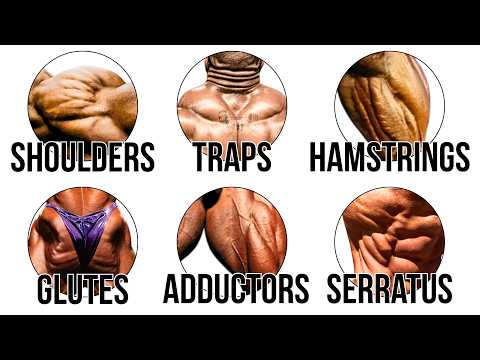
That's the whole idea behind Professor Mass: know your genetics, then train around them. Part 2 of the video covers shoulders, traps, hamstrings and more.
Free: The Genetics Starter Guide
The 8-insertion mirror check, a frame test and a 4-week plan with a weak-point slot.
Get the free ebook